Wood flooring is not limited to the floor. In some interior designs, selected flooring boards can also be used as a wall feature to create a warm, rustic, modern, or unique visual effect.
A wood feature wall can bring natural texture into a space and create a more comfortable and inviting atmosphere. Whether used in a living room, bedroom, hallway, office, showroom, café, or retail space, timber-look wall cladding can become a strong design feature without making the room feel overly decorative.
With the right preparation, suitable fixing method, and correct finishing details, flooring boards can be used to create a distinctive wall design.
Enjoy the Natural Beauty of Wood Anywhere
Natural materials continue to play an important role in interior design, and wood remains one of the most timeless choices. Its grain, texture, warmth, and colour variation can soften modern interiors and add character to simple spaces.
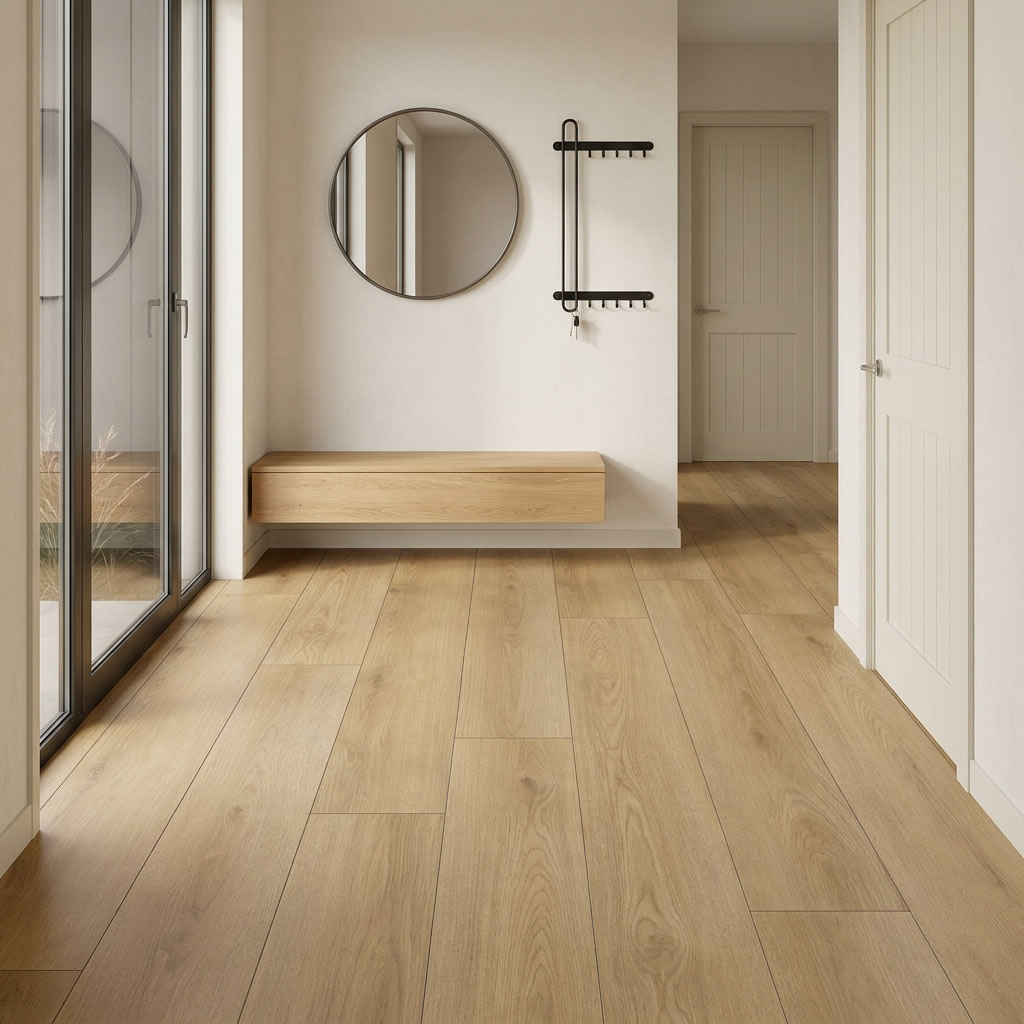
Using flooring boards on a wall is a creative way to display the natural beauty of wood in a vertical application. Different wood species, colours, finishes, textures, and board widths can create very different effects.
A light oak wall can feel calm and Nordic. A darker timber wall can create depth and luxury. A brushed or rustic surface can add texture and a more natural appearance.
Installation Considerations
Installing flooring boards on a wall requires proper planning. The wall surface should be clean, dry, stable, and suitable for the proposed fixing method.
Depending on the product and wall type, installation may involve:
- Specially designed mounting clips
- Suitable battens or fixing rails
- Compatible adhesive systems
- Aluminium flat bars or angle trims for internal and external corners
- Skirting boards, trims, or profiles for edge finishing
Where layered wooden boards are used, boards with a frontal locking system may make installation easier because they do not require the short edge to be knocked into place in the same way as some flooring systems.
However, the correct fixing method should always be confirmed with the product supplier or installer before installation begins.
Corner and Edge Finishing
Good finishing details are important for a professional result.
Internal corners may be finished with a suitable colour-matched acrylic filler where appropriate. External corners can be protected and finished with aluminium angle bars, timber trims, or other compatible profiles.
The joint between the wall covering and the floor can be concealed using skirting boards or suitable trim profiles.
In some cases, a skirting board may be modified or shaped to create a quarter-round style finish, depending on the design and board thickness.
Fixing TVs, Cabinets, and Other Objects
If a television, cabinet, shelf, or heavy object is to be installed on a wall covered with flooring boards, the load should not rely only on the wooden wall covering.
Heavy items should be fixed back to the structural wall, masonry wall, framing, or appropriate structural support behind the wall covering.
Light decorative items may be fixed to the wooden covering only where the fixing method is suitable, and the load is appropriate. Always use fixings designed for the specific application.
Indoor Conditions
The indoor conditions for timber or layered wooden boards used on walls should generally be similar to those required for wood flooring.
As a general guide, the room should be kept within a stable indoor environment. Relative humidity is commonly recommended between 45% and 60%, with indoor temperature around 18°C to 24°C, unless the manufacturer specifies otherwise.
Excessive humidity, very dry conditions, direct water exposure, strong heat, or poor ventilation may affect the appearance and performance of the boards.
Care and Maintenance
Wooden wall coverings should be maintained using care products suitable for the specific board finish.
For lacquered, oiled, brushed, or stained surfaces, use the cleaning and maintenance products recommended by the manufacturer. Avoid excessive water, harsh chemicals, abrasive cleaners, or unsuitable polishing products.
Regular dusting and gentle cleaning are usually enough for normal wall applications.
Final Thoughts
Fitting flooring boards on a wall can create a striking and natural interior feature. It allows the warmth and texture of wood to be used beyond the floor, bringing depth, character, and design interest to the space.
The key to a successful result is selecting the right product, preparing the wall properly, using a suitable fixing system, finishing corners and edges neatly, and maintaining the boards according to the manufacturer’s instructions.
When installed correctly, a wood flooring wall feature can make an interior feel warmer, more refined, and more memorable.