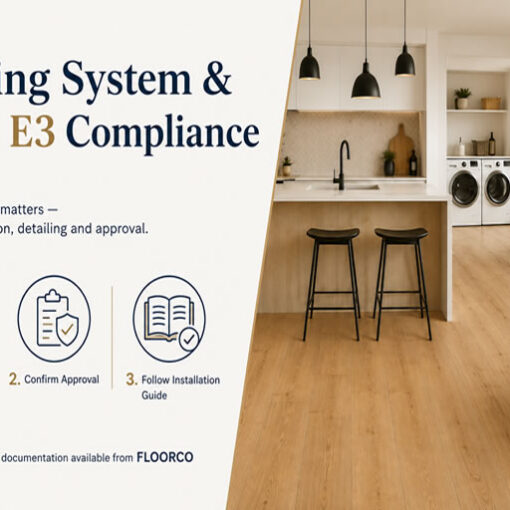
The kitchen is one of the most frequently used areas in a home. It is a space where cooking, cleaning, food preparation, family activity, foot traffic, and occasional spills are part of everyday life. Because of this, kitchen flooring needs to be practical, easy to maintain, and suitable for regular household use.
SPC flooring has become a popular option for kitchen areas because it offers a timber-look appearance with a rigid core structure and a protective surface layer. It can be a practical flooring choice for many homes, especially where homeowners want the visual warmth of wood with easier everyday maintenance.
However, like any flooring product, SPC flooring is not a “fit and forget” solution. Its performance depends on correct product selection, proper subfloor preparation, suitable installation, and ongoing care in accordance with the manufacturer’s instructions.
Below are some important points to consider before choosing SPC flooring for a kitchen.
1. Water Resistance and Everyday Kitchen Use
Kitchen floors are commonly exposed to small spills, splashes, food marks, and routine cleaning. For this reason, water resistance is an important consideration when selecting flooring for this area.
SPC flooring is generally more water-resistant than many wood-based flooring products because of its rigid composite core and surface construction. This can make it suitable for normal household kitchen use where occasional spills may occur.
However, water resistance does not mean the floor should be exposed to standing water, repeated wetting, or excessive moisture for extended periods. Spills should be cleaned promptly, and the floor should not be treated as a fully waterproof tanking system.
For best performance, the flooring must be installed in accordance with the manufacturer’s installation guidelines, including any requirements for perimeter sealing, joint treatment, expansion gaps, trims, and moisture control.
2. Stain Resistance and Easy Cleaning
A kitchen floor should be easy to clean and maintain. Food spills, cooking marks, grease, dust, and everyday dirt are common in this part of the home.
SPC flooring usually has a protective surface layer that helps make routine cleaning easier. Regular sweeping or vacuuming can remove dust and grit, while a slightly damp mop can be used for normal cleaning where permitted by the manufacturer.
Compared with tiled floors, SPC flooring does not usually have grout lines, which can make day-to-day cleaning more convenient in many households.
However, harsh chemicals, abrasive pads, steam mops, and excessive water should be avoided unless specifically approved by the manufacturer. Correct cleaning is important to protect the surface finish and maintain the appearance of the floor over time.
3. Durability for Busy Kitchen Areas
The kitchen is a high-use area. Chairs, foot traffic, dropped utensils, pets, children, and general household activity can all place pressure on the flooring.
SPC flooring is designed to provide a durable surface for everyday residential use. Depending on the product specification, wear layer, surface finish, and installation conditions, it can perform well in busy kitchen environments.
At the same time, SPC flooring is not damage-proof. Heavy impact, sharp objects, dragging furniture, excessive point loads, poor subfloor preparation, heat exposure, or incorrect installation can still cause damage or affect performance.
To help protect the floor, homeowners should use felt pads under furniture, avoid dragging heavy objects, clean spills promptly, and follow the recommended maintenance instructions.
4. Slip Resistance and Safety Considerations
Kitchen floors may occasionally become wet from spills, washing, or cleaning. Because of this, slip resistance should be considered when choosing any flooring product.
Some SPC flooring products have textured surfaces that may provide better underfoot grip than very smooth or polished surfaces. However, slip performance depends on the specific product, surface texture, cleaning condition, footwear, and whether the floor is wet or dry.
No flooring product can completely remove the risk of slipping. For this reason, spills should be cleaned promptly, the floor should be maintained correctly, and the selected product should be suitable for the intended use area.
Where slip resistance is important, the product’s slip-resistance rating should be reviewed before purchase.
5. Comfort and Timber-Look Appearance
Many homeowners want a kitchen floor that is both practical and visually appealing. SPC flooring is available in a wide range of timber-look colours, textures, and plank sizes, allowing it to suit many different kitchen and open-plan living designs.
Compared with harder mineral-based surfaces such as ceramic tile or polished concrete, SPC flooring may feel slightly warmer and more comfortable underfoot, depending on the product construction and installation system.
This makes it a popular option for homeowners who want the appearance of timber flooring while using a product that is generally easier to maintain in a kitchen environment.
6. Subfloor Preparation Is Critical
A successful flooring installation begins with the subfloor. Before SPC flooring is installed, the subfloor should be checked to ensure it is clean, dry, flat, stable, and suitable for the flooring system.
Uneven subfloors can place stress on the flooring joints and locking system. Moisture issues can also affect the long-term performance of the floor and may create problems after installation.
Any high spots, low spots, contamination, loose material, or moisture concerns should be addressed before installation begins. Installing over an unsuitable subfloor can lead to movement, joint issues, lifting, noise, or premature wear.
Proper subfloor preparation is one of the most important steps in achieving the expected performance of SPC flooring.
7. Installation and Maintenance Determine Performance
SPC flooring can only perform as intended when it is correctly selected, properly installed, and maintained in accordance with the manufacturer’s guidelines.
This includes following the required installation method, subfloor preparation requirements, expansion gaps, perimeter detailing, trims, edge sealing where required, and cleaning instructions.
After installation, ongoing care is equally important. Homeowners should avoid excessive water, steam cleaning unless approved, harsh chemicals, dragging furniture, and long-term exposure to unsuitable indoor conditions.
The expected performance of SPC flooring depends on the complete flooring system, not just the product itself.
NZBC E3 Internal Moisture Considerations
Where SPC flooring is proposed for kitchens, laundries, toilets, or other moisture-prone areas in New Zealand, the flooring system should be considered in relation to NZBC Clause E3 Internal Moisture.
The suitability of the flooring should be assessed based on the product specification, installation method, perimeter sealing, joint treatment, edge detailing, subfloor condition, and the specific project requirements.
Depending on the project and compliance pathway, SPC flooring may need to be considered as part of an Alternative Solution rather than treated as a simple E3/AS1 Acceptable Solution.
For this reason, the product should always be installed in accordance with the manufacturer’s instructions and any relevant project-specific compliance documentation.
Final Thoughts
SPC flooring can be a practical option for kitchen floors where homeowners want a timber-look surface that is easy to clean and suitable for normal household use.
Its key advantages include water resistance, easy maintenance, design flexibility, and everyday durability. However, these benefits depend on choosing the right product, preparing the subfloor correctly, installing the flooring properly, and maintaining it according to the manufacturer’s guidelines.
Before selecting SPC flooring for a kitchen, homeowners should review the product specification, installation requirements, maintenance instructions, slip-resistance rating, and moisture-related detailing.
A good kitchen floor is not only about appearance. It should be suitable for the space, installed correctly, and maintained properly so it can continue to perform as expected over time.