Kiwis love a good home renovation, but choosing the right flooring can be a challenge—especially with New Zealand’s changing climate and moisture conditions.
SPC flooring (Stone Polymer Composite) has become a popular option in recent years, particularly for homes where moisture resistance and easy maintenance are important.
While often described as “waterproof flooring”, SPC is more accurately a flooring system with a waterproof core and strong structural stability. This makes it suitable for areas such as kitchens, laundries, and entry spaces.
Understanding SPC Flooring
SPC flooring, short for Stone Polymer Composite, is an innovative and durable flooring option.
Popular since 2016, SPC flooring combines a limestone core with stabilizers, providing good dimensional stability and resistance to everyday use. This core structure makes it less likely to expand or contract when exposed to humidity changes, making it suitable for New Zealand homes where moisture variation and indoor conditions need to be considered.
The dense core itself does not absorb water, which helps improve performance in moisture-prone areas, ideal for splash-prone areas like kitchens and bathrooms. This robustness does not sacrifice comfort, and SPC flooring closely mimics the texture and appearance of natural timber.
Key Benefits of SPC Flooring
SPC flooring with a limestone core provides good resistance to everyday foot traffic and minor impacts, making it ideal for busy households or commercial spaces.
Moreover, the waterproof core helps improve resistance to everyday spills and moisture under normal use conditions.
Install SPC flooring in moisture-prone areas such as kitchens and bathrooms without worry. Its consistent performance, whether in damp or dry conditions, makes it a versatile choice for New Zealand’s varied climate.
Besides protection and durability, SPC flooring, with its basic sound reduction, especially when paired with underlay, is also a breeze to maintain, requiring only simple sweeping and occasional mopping to keep it looking pristine. It features slip resistance that varies by product and surface finish, improving safety in both homes and workplaces and helping reduce slip-and-fall accidents. These benefits make it a sensible, cost-effective flooring option for those seeking a blend of functionality, aesthetics, and safety in their environment.
While SPC flooring offers good performance in many situations, it is not suitable for every environment.
Its performance depends on factors such as subfloor condition, temperature exposure, and traffic level. Incorrect application can lead to issues such as joint stress, movement, or premature wear.
Common Installation Considerations
While SPC flooring performs well in many situations, its performance depends heavily on installation conditions.
In practice, subfloor preparation is often more critical than the installation itself. Uneven surfaces, insufficient expansion gaps, or incorrect installation can lead to issues such as joint stress, movement, or hollow sound.
These issues are typically related to site conditions rather than the product itself.
How SPC Flooring Stands Out
SPC flooring’s unique polymer composition, a blend of limestone and stabilizers, sets it apart. It excels with enhanced durability and waterproof properties, making it perfect for high-moisture areas. Its quick installation reduces disruption in residential or commercial applications.
| Feature | SPC Flooring | Vinyl Flooring | Laminate Flooring |
| Waterproof | ✅ Yes | ✅ Mostly | ❌ No |
| Durability | 🔹 Moderate to good | 🔹 Moderate | ✅ High |
| Scratch Resistance | 🔹 Moderate | 🔹 Moderate | ✅ High |
| Impact Resistance | ✅ High | 🔹❌ Low | 🔹 Moderatet |
| Moisture Resistance | ✅ High | ✅ High | ❌ Low |
| Installation | ✅ Easy | 🔹 Glue | ✅ Easy |
Comparing SPC to Vinyl and Other Flooring
SPC (Stone Plastic Composite) flooring offers a rigid core construction that provides good dimensional stability, particularly in areas subject to minor temperature or humidity fluctuations.
One of SPC’s key advantages over traditional vinyl flooring (LVT) is its ease of installation. Thanks to its click-lock floating system, SPC can be installed over a variety of subfloors — including concrete, ceramic tiles, and timber — without the need for adhesives. This makes it a faster and more straightforward option, especially for DIY installations or time-sensitive projects.
While both SPC and vinyl are highly water-resistant, SPC’s rigid composition can offer better performance in terms of surface flatness and resistance to telegraphing from minor subfloor imperfections.
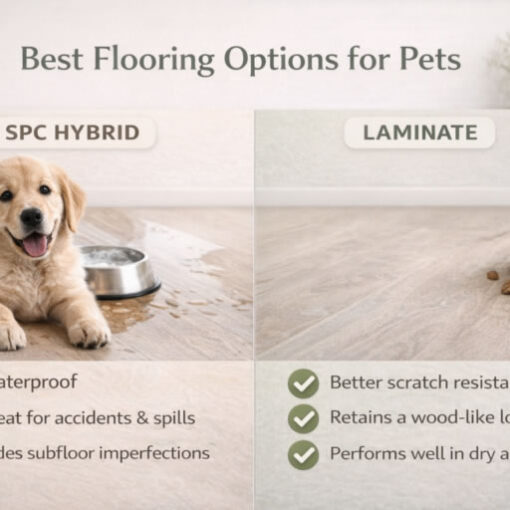
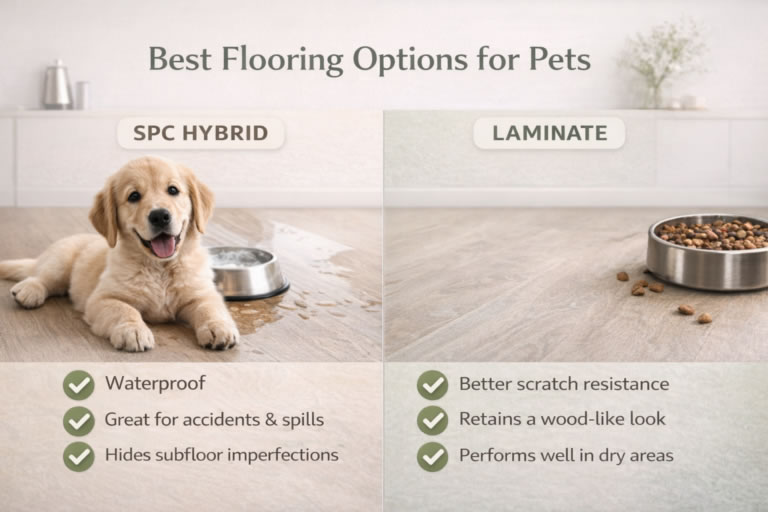
When compared to laminate, SPC generally handles moisture exposure more effectively, making it a practical choice for kitchens, laundries, and entryways. However, laminate may still offer higher scratch resistance in dry areas depending on the product’s wear rating.
Although SPC flooring can come at a slightly higher cost than standard vinyl, its installation convenience and structural stability may offer better overall value depending on the project’s needs and site conditions.
Installation of SPC Flooring
SPC flooring is surprisingly user-friendly to install, making it a popular choice in home improvement projects.
Many folks tackle this task as a DIY project. You’ll often find that these planks click together easily and can be laid down over a wide range of surfaces, such as concrete, ceramic, or even existing hardwood floors. Conveniently, the lack of adhesive required means less mess. With a little patience and attention, even beginners can achieve a professional-looking result.
No need for nails or glue.
Measure the room precisely – make sure you have more planks than needed to account for any mistakes. Allow space for expansion around the perimeter. Stagger the joints to give a more authentic appearance and ensure strength throughout the installation.
While installation might seem a breeze, always follow manufacturer guidelines, as techniques may have evolved with technological advancements up to late 2023. Keep your workspace clean and free from hazards to ensure a smooth and safe installation process.
Maintenance Tips for SPC Flooring
SPC flooring is durable and low-maintenance, making it an excellent choice for busy households and commercial spaces.
To keep your SPC floors in top condition, regular sweeping or vacuuming helps eliminate dirt and debris, which can cause scratches over time. Use a damp mop for deeper cleaning, but avoid harsh chemicals that can damage the protective layer. Opt for a pH-balanced cleaner specifically designed for vinyl floors to maintain their shine and longevity.
Interestingly, avoid using steam cleaners as they can cause the planks to warp. Instead, ensure spills are wiped up promptly to prevent any potential stains from setting in, while the core is water-resistant, prolonged exposure to certain substances can sometimes affect the appearance.
Additionally, use felt pads under heavy furniture to prevent dents and scratches, and consider using area rugs in high-traffic zones to further protect your floors. Regular maintenance not only keeps your SPC flooring looking fresh and vibrant but also helps extend its lifespan, ensuring you get the most out of your investment with practical solutions and straightforward care routines.
Design Options Available
SPC flooring offers a fantastic range of design possibilities, making it an ideal choice for anyone wanting to add a personal touch to their space. From rustic to modern, a wide array of styles satisfies different aesthetic demands.
Homeowners can enjoy the realistic look of wood and stone, achieved through advanced photo-realistic technology. This makes SPC flooring a great substitute for traditional materials without the high costs or maintenance.
Additionally, the texture options are impressive, with embossed in register (EIR) and hand-scraped options providing finishes that mimic natural elements. This variety in textures not only feels great underfoot but also adds dimension to rooms.
Colour choices cover everything from warm oak tones to cool greys, ensuring that you can complement or contrast any interior theme. With so many shades available, personalizing your space has never been easier.
Most designs incorporate UV and wear layers that make light refraction balance beautifully, meaning you’ll have flooring that ages gracefully in any home lighting. The enduring appeal of these choices makes SPC flooring a savvy design-led choice.
Finally, the ability to mix and match different styles means there’s room for creativity, too. Unique combinations and patterns can transform ordinary floors into statement pieces.
Limitations of SPC Flooring
While SPC flooring is robust and versatile, like most floating flooring systems, SPC will expand and contract with temperature changes. In areas with strong direct sunlight or heat, proper expansion gaps and layout planning are important to avoid movement issues. This movement can affect long-term performance if not properly managed.
It’s essential to avoid direct sunlight exposure due to this expansion, indicating the need for strategic layout planning to prevent flooring issues. Additionally, SPC flooring needs a level subfloor; uneven surfaces can compromise the stability.
Terms like “waterproofness” and “subflooring” often need clarification to clarify SPC flooring’s limitations.
Temperature and Sunlight Considerations
SPC flooring’s performance can be affected by temperature and direct sunlight exposure.
- Avoid installing SPC flooring in areas receiving strong, direct sunlight.
- Maintain room temperature below 30°C to prevent plank warping.
- Ensure the subfloor is level, as uneven surfaces can cause damage.
Like most floating flooring systems, SPC flooring will expand and contract with temperature changes. In areas with strong direct sunlight or heat, proper expansion gaps and layout planning are important.
For optimal performance, careful layout planning and mindful placement in relation to sunlight are crucial.
Flooring Level Requirements
For SPC flooring to perform optimally, a perfectly level subfloor is essential to prevent any damage.
- Assess the Subfloor: Check for any irregularities or bumps exceeding 3mm.
- Prepare the Surface: Sand down or fill any uneven areas promptly.
- Test for Stability: Lay out a few planks temporarily to ensure they are level.
- Seek Professional Help: Consult experts for significant levelling issues.
Keeping your subfloor level helps in maintaining the durability and aesthetics of SPC flooring.
Failure to address uneven floors can result in compromised flooring stability and substantial repair costs.
Cost-Effectiveness of SPC Flooring
SPC flooring stands out as a remarkably cost-effective option among modern flooring choices. Why is that?
In 2016, flooring insiders, a leading market research company, reported that vinyl products like SPC floors cost up to 30% less than hardwood alternatives.
Plus, it’s not just about the purchase price—SPC flooring’s durability means long-term savings on repairs and replacements. Their life span can exceed 15-20 years with proper care.
When you factor in the ease of installation, where most can aptly DIY, saving up to $3,000, according to trade estimates, the overall affordability of SPC flooring is exceptionally attractive.
The combination of initial cost savings, low maintenance needs, and durability ensures SPC stands as a smart financial choice.
Why Choose Our SPC Flooring
Our SPC flooring blends contemporary style, thoughtfully designed for the unique demands of New Zealand homes and commercial interiors. With a wide range of thicknesses and wear layers available, we offer flooring solutions that suit both residential comfort and light to moderate commercial use — allowing you to choose the right product for your specific space and traffic level.
We pride ourselves on delivering a practical balance of cost, performance, and design— offering top-quality SPC flooring at some of the most competitive prices in New Zealand.
Engineered to perform in New Zealand’s variable climate, our flooring provides excellent stability in the face of temperature and humidity fluctuations, helping your floors maintain their form and beauty over time — without the need for frequent replacement.
Installation is straightforward with our floating click-lock system, compatible with a variety of subfloors, including concrete, tiles, and timber. Whether you’re a DIY enthusiast or working with a professional installer, our SPC flooring offers flexibility and ease of use that delivers clean, professional results.
With a product range built around versatility, performance, and style, our SPC flooring gives you confidence with every square metre — backed by quality and suited to everyday residential and light commercial use.
Ideal Applications for SPC Flooring
SPC flooring is a popular choice for a variety of settings, thanks to its waterproof core, low maintenance requirements, and clean aesthetic. It’s particularly well-suited for residential environments such as kitchens, bathrooms, laundries, and even sunrooms — areas where moisture resistance and simple cleaning routines are essential.
According to a 2016 report by the Residential Builders Association, nearly 70% of new homes included products like SPC vinyl, showcasing its growing appeal in everyday domestic use.
However, it’s important to understand that not all SPC flooring is designed for commercial environments. While many SPC products offer decent scratch and wear resistance, their suitability for offices, retail spaces, or hospitality venues depends heavily on the product’s overall thickness (usually ranging from 3.5mm to 7mm or more) and the wear layer rating (e.g., 0.3mm for light traffic vs. 0.5mm+ for commercial use).
For light commercial areas, thicker SPC options with high-quality wear layers may perform well — offering resistance to moderate foot traffic, minor impacts, and stains. But for high-traffic commercial settings, careful product selection based on durability specs is critical. Otherwise, wear and tear can accumulate quickly, leading to premature surface damage.
Furthermore, SPC flooring is ideal for spaces with temperature fluctuations — such as enclosed balconies or sunrooms — thanks to its dimensional stability. Its click-lock system also makes it easier to replace individual planks, which adds convenience in maintenance-heavy environments.
Is SPC better than laminate?
When considering flooring options, Stone Plastic Composite (SPC) stands out for its excellent waterproofing, dimensional stability, and ease of maintenance, making it a strong contender in many Kiwi homes — especially in areas exposed to moisture such as kitchens and bathrooms.
However, SPC is not a one-size-fits-all solution. While its core is rigid and waterproof, the surface hardness of SPC is not inherently higher than that of laminate flooring. In fact, high-quality laminate (AC4/AC5 rated) can offer superior scratch and dent resistance, particularly in dry, high-traffic environments like living rooms or hallways.
In terms of durability, laminate flooring often outperforms SPC in resisting wear from sharp objects or heavy furniture due to its high-density fiberboard (HDF) core and aluminum oxide wear layer. On the other hand, SPC excels in dimensional stability under temperature fluctuations and direct moisture contact.
Aesthetically, both SPC and laminate now offer realistic wood and stone visuals, thanks to advanced printing technologies. However, laminate may deliver slightly better texture depth and visual clarity, depending on the product line.
Cost-wise, SPC tends to be more expensive upfront. While it may offer savings over time due to lower maintenance in wet environments, laminate flooring remains a cost-effective and durable choice for many homeowners, especially in low-moisture settings.
In short, SPC is better suited for wet areas and homes seeking waterproof solutions, but for dry areas with high foot traffic, laminate can be equally — if not more — durable and visually appealing.
Does SPC flooring need underlay?
Many SPC flooring products come with an attached underlay, which provides basic acoustic comfort and simplifies installation. However, additional layers may still be required depending on the project conditions. For example, a polyethylene moisture barrier is commonly used over concrete subfloors in New Zealand. In multi-unit developments, acoustic requirements may also apply. The exact requirement depends on the subfloor condition, building type, and installation environment.
because it comes with a built-in layer. This integrated underlay adds comfort and soundproofing.
That being said, you might find additional underlay useful in certain situations. For instance, in settings where extra sound insulation is desired.
Also, adding underlay can help level out minor imperfections on the subfloor, ensuring a smoother installation process.
Those with chilly climates might consider an underlay to improve thermal insulation. This could make the floor feel warmer, especially in those frosty Kiwi winters.
Overall, the decision to use an added underlay will depend on specific needs. Factors like existing subfloor conditions and personal preferences on sound and warmth may sway your choice.
Note
Choosing the right flooring depends on how the space is used, the level of traffic, and site conditions. It’s always recommended to confirm suitability before installation, especially for kitchens, bathrooms, or commercial environments.

Editor: Terry Shi
The founder of FLOORCO has a strong industry background and substantial supply chain resources.