Your kitchen is one of the hardest-working rooms in the home. It deals with daily foot traffic, food spills, wet shoes, dropped utensils, cleaning moisture, chair movement, and changes in temperature and humidity.
Because of this, choosing the right kitchen flooring is not only about colour or style. It is about selecting a product that suits the way the space is actually used.
SPC flooring has become a popular option for New Zealand kitchens because it offers a practical balance of water resistance, easy maintenance, dimensional stability, and modern design options. However, not every SPC product is the same, and the best choice depends on the product specification, the subfloor, the kitchen layout, and the installation method.
This guide explains what SPC flooring is, which features matter most in a kitchen, and how to choose a style that looks good and performs well in everyday life.
What Is SPC Flooring?
SPC stands for Stone Plastic Composite or Stone Polymer Composite. It is a rigid vinyl flooring product with a dense core, typically made with limestone powder, PVC, and stabilisers.
Most SPC flooring products are made up of several layers:
Wear layer
A clear protective surface that helps resist everyday scuffs, stains, and surface wear.
Decorative layer
A printed design film that creates the look of timber, stone, tile, or other finishes.
SPC rigid core
A dense mineral-filled core that gives the plank its structure and dimensional stability.
Attached backing or underlay
Some SPC products include a backing layer to improve comfort and reduce walking sound.
SPC flooring is usually installed as a floating click-lock floor. This makes installation efficient in many renovations, provided the subfloor is suitable and the product installation guide is followed.
Why SPC Flooring Is Popular in Kitchens
Kitchens need flooring that can handle normal household mess without becoming difficult to maintain.
SPC flooring is often considered for kitchens because it offers:
Good water resistance for everyday kitchen spills
A rigid core that provides stability under normal indoor conditions
Simple cleaning and maintenance
A wide range of timber-look, stone-look, and tile-look designs
A thinner build-up than many traditional flooring systems
Efficient floating installation in suitable situations
Compared with HDF-based laminate flooring, SPC is generally more tolerant of everyday spills, wet footprints, and damp mopping. This makes it a practical option for kitchens where occasional moisture exposure is expected.
However, SPC should not be described as a completely waterproof installed flooring system. The core itself is highly water-resistant, but joints, edges, perimeter sealing, attached backing, subfloor moisture, and installation quality still matter.
Spills should still be cleaned promptly, especially around sinks, dishwashers, fridges, doorways, and kitchen island areas.
What Kitchen Conditions Should You Consider?
A kitchen floor faces different conditions from a bedroom, study, or formal living room.
Before choosing SPC flooring, consider the following:
Moisture exposure
Cooking, cleaning, wet shoes, spills, and appliance leaks can all affect the floor.
Foot traffic
Kitchens are high-use areas, especially in family homes and open-plan layouts.
Cleaning frequency
Kitchen floors are cleaned more often than many other rooms.
Impact risk
Dropped utensils, bottles, pots, and small appliances can mark the surface.
Sunlight and heat
Large windows, sliding doors, and strong afternoon sun can create heat build-up.
Kitchen layout
Cabinetry, islands, whiteware, kickboards, and trims need to be planned before installation.
Subfloor condition
SPC performs best over a flat, dry, clean, and stable subfloor.
A good kitchen flooring choice should suit all these conditions, not just look good in a sample board.
Key Features to Look for in Kitchen SPC Flooring
When comparing SPC flooring for a kitchen, focus on specification first.
1. Water-Resistant Core
SPC’s rigid core is one of its biggest advantages. Because it does not use an HDF wood-fibre core like laminate flooring, it is generally less vulnerable to core swelling from everyday spills.
For kitchens, look for a product with:
a water-resistant SPC core
a reliable locking system
clear kitchen installation guidance
suitable perimeter detailing instructions
maintenance guidance for spill-prone areas
Remember, water resistance does not remove the need for correct installation. Leaks, standing water, poor sealing, and trapped moisture beneath the floor can still cause problems.
2. Wear Layer
The wear layer is the transparent protective surface over the decorative film. It helps protect the floor from everyday scuffs, stains, and surface wear.
For normal residential kitchens, a 0.3mm wear layer may be suitable, depending on product quality and household use.
For busier homes, pets, rental properties, or heavier kitchen traffic, a 0.5mm wear layer may be worth considering.
The wear layer should be considered together with:
surface coating
plank thickness
locking system
warranty terms
cleaning requirements
expected traffic level
A thicker wear layer does not make the floor damage-proof, but it can improve suitability for heavier use.
3. Slip Awareness
Kitchen floors can become slippery when wet. SPC flooring comes in different surface textures, from smooth finishes to more textured timber-look or stone-look designs.
For kitchens, consider:
matte or low-sheen finishes
lightly textured surfaces
product slip information where available
how the floor feels under shoes and bare feet
A textured surface may offer better grip and may also help disguise small marks and daily wear.
4. Plank Thickness
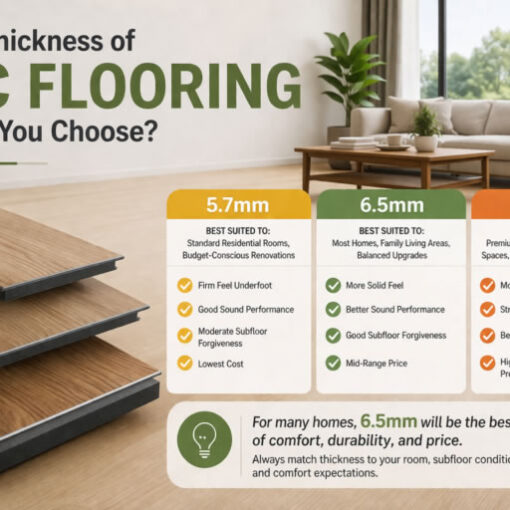
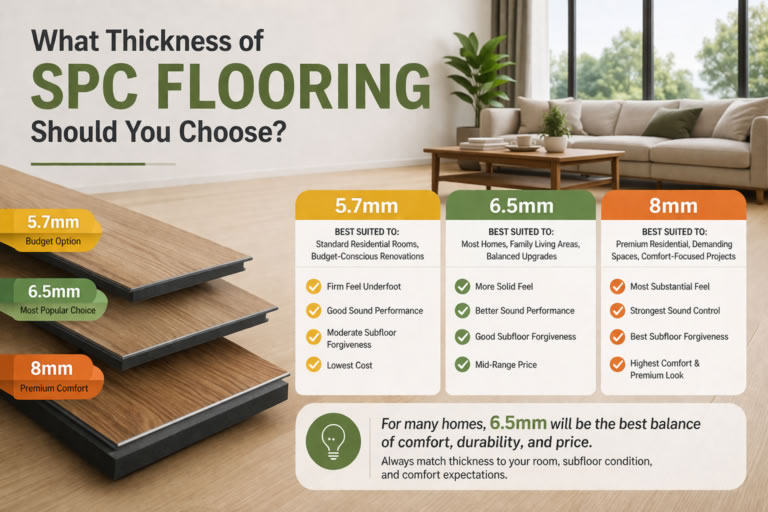
SPC flooring is available in different thicknesses. Many residential SPC products sit around 4mm to 6.5mm, although this varies by product range.
Thicker boards may feel more substantial underfoot, but they do not replace proper subfloor preparation.
For kitchens, thickness should be considered alongside:
subfloor flatness
door clearances
transition heights
whiteware and cabinetry details
locking strength
attached backing
overall floor build-up
A thicker SPC product may improve comfort and feel, but the base still needs to be flat, dry, clean, and stable.
5. Attached Underlay
Some SPC flooring comes with an attached backing or underlay. This can help with walking comfort and basic sound reduction.
However, additional requirements may still apply depending on the project.
For example:
Concrete subfloors may require moisture control measures.
Apartments may require acoustic performance checks.
Existing floors must be secure, flat, clean, and suitable.
The underlay must be compatible with the SPC product.
Do not assume that adding extra underlay is always better. Some SPC products are not designed to be installed over additional soft underlay, as this may affect locking strength and floor stability.
SPC Flooring Style Options for Kitchens
One reason SPC is popular is its design flexibility. It can create the look of timber, stone, or tile without the same installation complexity as some traditional materials.
Common kitchen styles include:
| Look | Best Suited To | Design Notes |
|---|---|---|
| Classic timber-look | Traditional and modern kitchens | Warms up white or neutral cabinetry |
| Natural oak | Open-plan homes | Timeless, soft, and easy to match |
| Grey-wash oak | Contemporary kitchens | Works with black, white, and stone finishes |
| Light oak or blonde timber | Smaller kitchens | Helps the room feel brighter and larger |
| Stone-look SPC | Modern or industrial kitchens | Gives a clean tile-like effect |
| Herringbone-style SPC | Feature kitchens and open-plan zones | Adds pattern and visual interest |
| Dark charcoal or smoked timber | Larger kitchens with good light | Creates drama but may show dust and marks more easily |
For most kitchens, mid-tone colours and matte finishes are practical because they tend to hide dust, small marks, and daily wear better than very dark or very pale floors.
Maintenance for Kitchen SPC Flooring
SPC flooring is relatively easy to maintain, but low maintenance does mean no maintenance.
A sensible kitchen care routine includes:
Sweep or vacuum regularly to remove grit and crumbs.
Use a damp mop with a suitable pH-neutral cleaner.
Wipe spills promptly.
Use mats at exterior doors and high-use kitchen entries.
Fit felt pads under movable furniture.
Avoid dragging fridges, dishwashers, or heavy furniture across the floor.
Avoid steam mops unless the product guide specifically allows them.
Avoid harsh chemicals, abrasive pads, and solvent-based cleaners.
Grit and sand can act like sandpaper. In kitchens connected to outdoor areas, entry mats and regular cleaning can significantly reduce visible wear.
What Happens If a Plank Is Damaged?
SPC flooring is durable for everyday use, but it is not indestructible.
Sharp objects, dragged appliances, heavy point loads, pet claws, or dropped items can still mark or damage the surface.
If a plank is badly damaged, replacement may be possible. However, this depends on:
the locking system
the installation direction
the room layout
where the damaged plank is located
whether matching stock is available
whether the floor can be lifted back to that plank
In some cases, the floor may need to be lifted from the nearest wall back to the damaged board. For this reason, it is wise to keep spare planks from the original batch.
SPC Flooring and Underfloor Heating
Many SPC products may be suitable for underfloor heating, but this must be confirmed before purchase.
Check:
whether the SPC product is approved for underfloor heating
the maximum surface temperature
the heating system type
the required heating ramp-up process
the installation guide
whether the system is suitable for floating floors
Temperature limits are important. Excessive heat or rapid temperature changes can increase the risk of movement, gapping, peaking, or localised distortion.
Sunlight and Heat in Kitchens
Kitchens often have large windows, sliding doors, or open-plan connections to outdoor areas. This can create strong direct sunlight and heat build-up.
SPC flooring can be affected by:
strong direct sunlight
dark floor colours
large glazing
poor ventilation
insufficient expansion allowance
high surface temperatures
Like many flooring products, SPC can fade or change colour over time under strong sunlight. Heat build-up can also increase movement risk.
For sun-exposed kitchens, consider:
curtains or blinds
UV-filtering glass where practical
medium or lighter floor colours
correct expansion gaps
manufacturer installation guidance
avoiding excessive heat build-up
This is especially important in north-facing rooms, conservatory-style kitchens, or spaces with large sliders.
Buying SPC Flooring in New Zealand
When choosing SPC flooring in New Zealand, it is worth buying from a supplier that can provide clear product information and practical support.
Before ordering, ask about:
product thickness
wear layer thickness
locking system
attached backing
water resistance
slip information where available
VOC or emissions information
underfloor heating suitability
installation requirements
warranty terms
stock availability
batch consistency
matching trims and profiles
Samples are important. Colour and texture can look different in a showroom, under natural light, and under kitchen lighting.
For larger projects, confirm stock availability before installation is booked.
Frequently Asked Questions
Is SPC flooring suitable for kitchens?
Yes, SPC flooring can be a practical option for many kitchens because it has a highly water-resistant core and is generally easy to maintain. However, the full flooring system still depends on correct installation, subfloor preparation, expansion allowance, and proper maintenance.
Does SPC flooring swell when wet?
The SPC core itself is highly water-resistant and does not swell like an HDF laminate core. However, standing water, leaks, poor perimeter sealing, trapped moisture, or incorrect installation can still affect the flooring system. Spills should be cleaned promptly.
Can SPC flooring be used under kitchen appliances?
This depends on the appliance, product system, and installation method. Heavy appliances and kitchen islands require careful detailing. The flooring supplier or installer should confirm the correct approach before installation.
Is SPC better than laminate for kitchens?
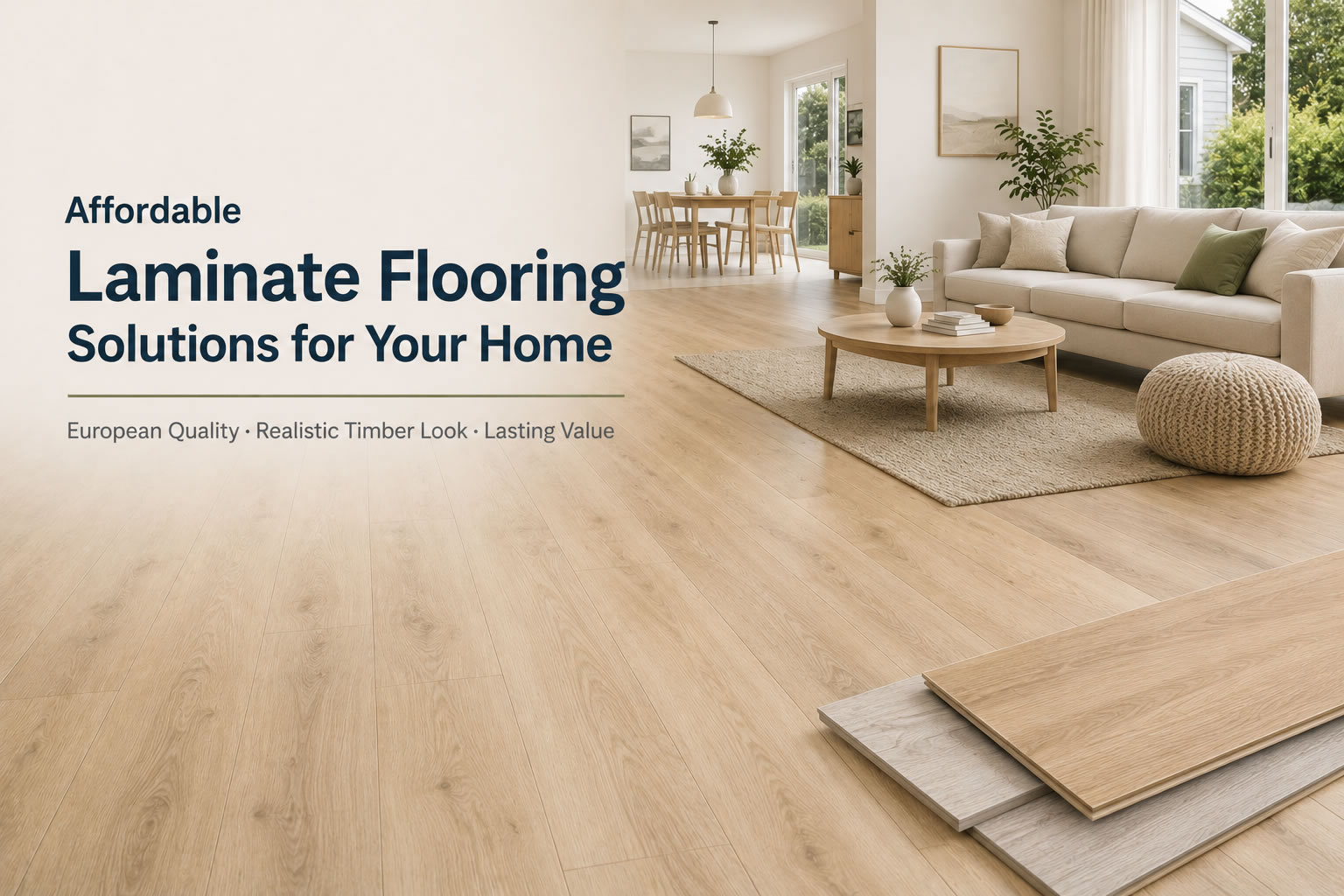
SPC is generally more tolerant of everyday kitchen spills and damp cleaning than HDF-based laminate flooring. However, high-quality laminate may offer stronger scratch resistance and a warmer, more timber-like feel in dry areas. The better choice depends on the kitchen conditions and product specification.
Can SPC flooring be installed over tiles?
Sometimes, yes. Existing tiles must be secure, flat, clean, dry, and suitable under the product installation guide. Uneven grout lines, loose tiles, cracks, or moisture issues may need preparation first.
Is SPC flooring scratch-proof?
No. SPC flooring can resist everyday scuffs and wear, depending on the wear layer and surface coating, but it is not scratch-proof. Sharp objects, dragged furniture, grit, and heavy point loads can still mark the surface.
Final Thought
SPC flooring can be a practical and attractive option for many New Zealand kitchens.
Its main strengths are water resistance, easy maintenance, design flexibility, and efficient installation. These qualities make it especially useful in busy kitchens where spills, cleaning, and daily foot traffic are part of normal life.
The key is to choose the right specification, prepare the subfloor properly, plan the kitchen layout carefully, and follow the installation and maintenance guidance.
With the right product and correct installation, SPC flooring can help create a kitchen that looks good and works well for everyday living.

Editor: Terry Shi
The founder of FLOORCO has a strong industry background and substantial supply chain resources.