Many homeowners want flooring that looks beautiful, performs well, and fits their budget. However, choosing the right flooring is not only about colour or appearance. It is also important to consider the material, thickness, surface finish, installation method, durability, maintenance requirements, and how the flooring will be used in daily life.
SPC flooring has become a popular option for many homes and commercial spaces because it offers a timber-look design, a rigid core structure, and practical everyday performance. However, not all SPC flooring products are the same. Product quality can vary depending on the raw materials, manufacturing process, locking system, wear layer, dimensional stability, and installation requirements.
Here are some practical points to consider when choosing SPC flooring.
1. Check the Core Material and Appearance
The core of SPC flooring can give some indication of the product’s material composition and manufacturing quality. Some SPC cores may appear light in colour, while others may appear grey or darker depending on the formulation, additives, and production process.
A lighter core is often associated with cleaner raw material, but colour alone should not be treated as the only sign of quality. Some manufacturers may use pigments, stabilisers, or other additives to achieve a specific appearance or performance requirement.
Rather than judging quality only by colour, it is better to assess the overall product specification, including core density, dimensional stability, locking strength, product certification, and the manufacturer’s technical documentation.
2. Measure the Thickness
The total thickness of SPC flooring is an important specification. It can affect the feel underfoot, locking strength, installation suitability, and transition height with other floor finishes.
Before choosing a product, check whether the actual thickness is consistent with the product specification. A caliper or micrometer can be used to measure the flooring more accurately.
A small manufacturing tolerance may occur, depending on the product and production standard. However, large or inconsistent differences in thickness may affect installation quality, joint performance, and the final appearance of the floor.
3. Review the Wear Layer
The wear layer is one of the most important parts of SPC flooring. It helps protect the decorative surface from normal daily wear.
A thicker wear layer may provide better long-term surface protection, especially in busy homes or light commercial environments. However, wear layer thickness is not the only factor. Surface coating quality, texture, scratch resistance, stain resistance, and maintenance habits also affect long-term performance.
When comparing SPC flooring, always check the wear layer specification and whether the product is suitable for the intended use area.
4. Consider Water Resistance Carefully
SPC flooring is generally known for its water-resistant core, which can make it suitable for many areas of the home where everyday spills may occur.
However, water resistance does not mean the flooring should be exposed to standing water, flooding, repeated wetting, or excessive moisture for long periods. Performance also depends on the locking system, joint fit, perimeter detailing, subfloor condition, and installation method.
For kitchens, laundries, toilets, and other moisture-prone areas, the product should be installed strictly in accordance with the manufacturer’s instructions. Edge sealing, expansion gaps, trims, and moisture-control requirements should also be reviewed before installation.
5. Check Surface Texture and Slip Resistance
The surface texture of SPC flooring affects both appearance and underfoot feel. Some products have a smooth surface, while others have an embossed or textured surface that creates a more realistic timber appearance.
Where slip resistance is important, especially in kitchens, entrances, or areas where the floor may occasionally become wet, the product’s slip-resistance rating should be checked.
A textured surface may provide better grip than a very smooth surface, but no flooring product can completely remove the risk of slipping. Spills should always be cleaned promptly, and the floor should be maintained correctly.
6. Check the Locking System
The locking system is a critical part of SPC flooring. A well-manufactured locking profile helps the planks connect properly and supports a stable floating floor installation.
Before installation, check whether the locks are straight, clean, and free from damage. The planks should connect smoothly without excessive force. Poorly made or damaged locking systems may lead to gaps, movement, joint failure, or uneven flooring after installation.
The locking system can be affected by product quality, plank thickness, core density, handling, transport, subfloor flatness, and installation workmanship.
7. Look at the Print Clarity and Surface Finish
The visual quality of SPC flooring depends on the decorative film, surface texture, and overall finish. A good SPC floor should have a clear design, natural colour variation, and a surface texture that suits the intended interior style.
When choosing a product, view a full sample board or several planks together rather than judging from one small piece. This helps you understand the colour variation, pattern repeat, surface reflection, and how the floor may look across a larger area.
8. Consider Smell and Indoor Use
A strong or unusual smell may indicate that the product needs further review, but smell alone should not be used as the only quality test.
For indoor flooring, it is better to check relevant product documentation, such as emissions testing, VOC information, and compliance documents where available. These documents provide a more reliable basis for assessing whether the product is suitable for indoor use.
A good-quality SPC flooring product should be supported by clear technical information from the supplier or manufacturer.
9. Installation and Maintenance Matters
Even a good SPC flooring product can perform poorly if it is installed incorrectly.
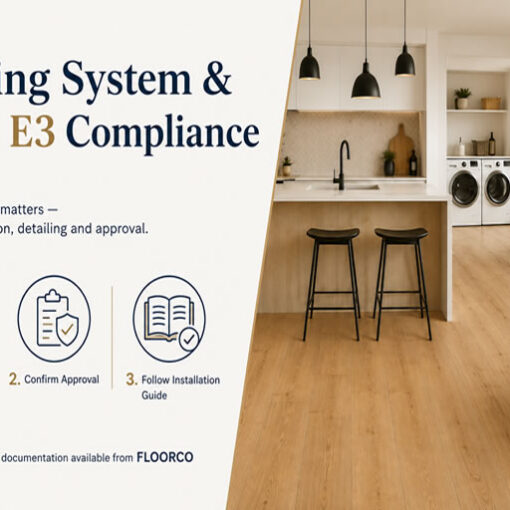
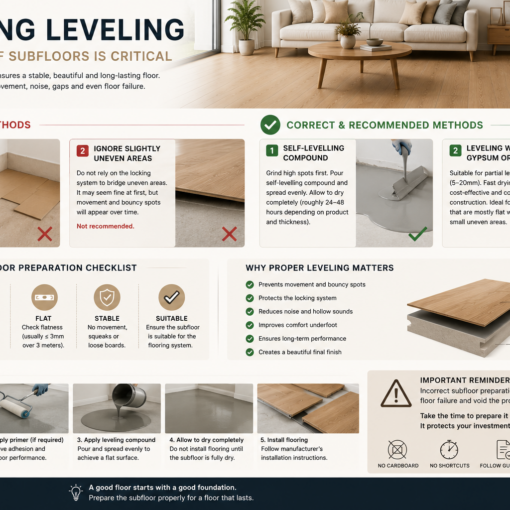
Before installation, the subfloor should be clean, dry, flat, stable, and suitable for the flooring system. Uneven subfloors can place stress on the locking system and may cause movement, noise, gaps, or joint damage.
Expansion gaps, perimeter detailing, trims, moisture control, and acclimatisation requirements should all be followed according to the manufacturer’s guidelines.
After installation, regular maintenance is also important. Avoid excessive water, steam mops, harsh chemicals, abrasive pads, dragging furniture, and heavy point loads unless permitted by the manufacturer.
SPC flooring can only perform as intended when it is correctly selected, properly installed, and maintained in accordance with the manufacturer’s instructions.
Final Thoughts
Choosing good SPC flooring requires more than selecting the right colour. You should consider the core material, thickness, wear layer, locking system, surface texture, water resistance, slip resistance, product documentation, installation requirements, and maintenance guidelines.
A good SPC floor should not only look attractive but also be suitable for the space, the subfloor, and the way it will be used.
Before making a final decision, it is always recommended to view samples in person, compare product specifications, and speak with a flooring specialist to ensure the flooring is suitable for your project.